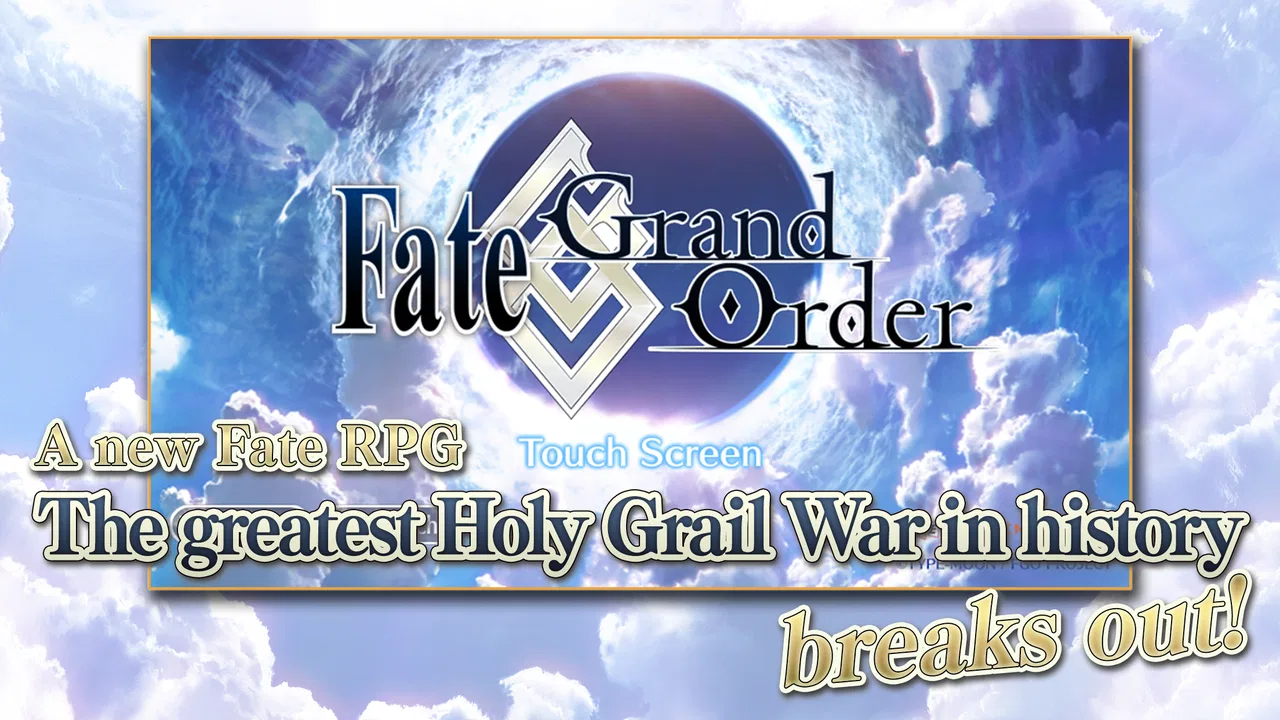
Fate/Grand Order (English)
- 4.0
- Rating
- 5.00M
- Installs
- Free
- Price
 Analysis by App-foxy
I approached Fate/Grand Order as a long-form role-playing game rather than a quick mobile distraction, and that distinction matters from the first session. This is a story-led adventure from Aniplex Inc. with a strong focus on its Fate universe, character collection, battles, and gradual progress. It is free to start, rated Teen, and has reached over a million installs, so it is clearly aimed at players who are comfortable committing to a substantial mobile RPG instead of finishing a short campaign in a weekend.
My overall impression is mixed in a useful way: the writing and character-driven structure give it more personality than many collection-based games, while the amount of reading, repeated preparation, and long-term resource management can make it feel demanding. I would recommend it to someone who enjoys Japanese role-playing games and wants an ongoing story. I would not point a casual player toward it if they mainly want immediate action, simple controls, or a game that explains every system quickly.
What playing it feels like after the first few sessions
The central appeal is the combination of narrative and turn-based encounters. Battles are not simply interruptions between story scenes; they ask me to think about party composition, enemy types, skill timing, and the order in which actions are used. That makes even familiar fights more engaging when I stop treating each encounter as something to rush through.
You May Also Like

 Blood Strike: 2.5 Anniversary
Blood Strike’s Loadouts Turn Every Drop Into a Tactical Gamble
A close look at Blood Strike’s custom loadouts: how fast access to signature weapons reshapes its battle royale rhythm, rewards preparation, and narrows the gap between fights.

 Pandora - Music & Podcasts
Pandora’s Music Is Easy to Start, but Harder to Recover
Pandora’s strength is its low-effort path from a seed to a station. Its weak spot is how much confidence it asks you to place in connection, setup, and quiet recovery.

 8 Ball Pool
 Is Built on Rivalries, Rematches, and Routine
A close look at the rivalries, rematches, shared routines, and unanswered safety questions that turn a quick pool match into a persistent mobile community.

 Samsung Music
’s Quiet Strength Is Playing What You Already Own
Its reach comes less from spectacle than from dependable access to a personal library. That simplicity is both the app’s strongest retention engine and its ceiling.

 AccuWeather: Weather Radar
AccuWeather Review: A Quick, Clear Forecast for Everyday Decisions
For everyday plans, the best forecast is the one you can understand quickly. AccuWeather makes rain timing, radar, and local conditions easy to act on, with a few trade-offs.

 Hill Climb Racing
Why Hill Climb Racing Still Turns Crashes Into One More Run
A tiny car, a bumpy hill and one more upgrade: Hill Climb Racing keeps resurfacing because its simple chaos makes every near-miss feel personal.
More From Our News Desk



The story also gives the game a different rhythm from many mobile RPGs. I spend part of a session reading dialogue and learning about characters, then switch into combat and planning. That change of pace works well when I have thirty minutes available, but it can feel slow when I only want a quick battle. The game rewards patience more than constant tapping.
The title’s connection to the wider Fate setting is important, but I would not treat prior knowledge as a strict requirement for trying it. Newcomers can follow the basic direction of the adventure, although the large cast, terminology, and dramatic history may take time to absorb. Familiarity with the franchise can make character appearances more exciting, yet the game still has to earn attention through its own scenes and battles.
One practical strength is that the story gives me a reason to continue beyond simply improving numbers. In a less narrative-focused collector, I might log in only to claim resources or upgrade a unit. Here, the promise of the next chapter or character interaction can be a stronger motivation. That is especially useful for players who normally lose interest in games built around repeated combat.
Building a party requires more thought than simply choosing the rarest character
The most useful lesson I learned was to stop viewing the roster as a simple ranking. A character who looks powerful in isolation may not solve the problem in front of me. A balanced group, suitable skills, and a sensible turn order often matter more than filling every position with the most impressive-looking option.
I also found it helpful to decide what kind of player I wanted to be before spending resources. If I tried to chase every appealing character, my attention became scattered. If I focused on developing a dependable core and saved materials for situations that genuinely blocked progress, the game felt calmer. That is a small change, but it makes the difference between deliberate planning and constant reaction.
For daily play, I would divide sessions into two types. On a busy day, I would handle a few manageable battles and avoid starting a long story section that I could not read properly. On a quieter day, I would set aside time for the narrative and use combat as a break between scenes. This sounds obvious, but it prevents the game from becoming a chore squeezed into every spare minute.
Another useful habit is to read skill descriptions before upgrading blindly. In a game with many characters and abilities, a modest improvement to a skill I use constantly can be more valuable than spreading materials across the entire roster. I prefer a focused team because it reduces decision fatigue and helps me understand why a battle succeeded or failed.
Progress is satisfying, but the long-term structure can create pressure
The free entry point is genuine in the sense that I can begin playing without paying. However, free-to-play does not mean friction-free. The game is built around long-term collection and improvement, so patience becomes part of the cost. I have to accept that I will not obtain every appealing character immediately and that some upgrades require planning rather than impulse.
That pressure is not automatically unfair, but it is noticeable. Character-focused games are good at making a new addition feel urgent, especially when I already care about the cast. The safest approach is to decide in advance what I am willing to spend and to treat that boundary as fixed. The available purchase range runs from $0.99 to $79.99 per item, which makes setting a personal limit particularly important.
I appreciate that the game can be enjoyed as a story experience without requiring me to chase every possible addition. Still, players who dislike randomized collection systems or who feel compelled to complete a roster should think carefully before starting. The problem is not simply the existence of purchases; it is the emotional pressure created when progress, attachment, and limited resources meet.
I would also avoid measuring my experience against players who have been active for much longer. Their developed teams and broad collections can make early progress look inadequate, even when my own account is moving at a healthy pace. Comparing only against my previous battles gives a more accurate picture of whether I am learning and improving.
How I judge fairness when there is no need to spend
From a fairness perspective, I see this primarily as a personal-progression RPG rather than a contest where I must defeat other players to prove the value of my account. That changes how I evaluate purchases. A paid character or resource may make my own journey smoother or more varied, but the important question for me is whether I can enjoy the story and solve encounters without treating payment as an obligation.
I would be cautious about making stronger claims than that. The purchase information establishes that optional items are sold across a broad price range, but it does not by itself prove that spending is required, nor does it prove that every progression path feels identical for every player. My experience is best described as playable without paying, with the usual need for patience and resource discipline that comes with a collection-focused RPG.
The lack of a conventional competitive ladder is a positive factor for me. I am less likely to feel that another player’s spending directly invalidates my own progress. My main competition is against the game’s encounters and my own planning mistakes. That makes saving resources feel like a strategic choice instead of a race to keep up with a community leaderboard.
Even so, fairness is not only about winning against other people. It is also about whether the game respects my time. Repeated battles, character development, and story reading can be rewarding, but they require a regular investment. Someone looking for a compact experience may see the same depth as unnecessary repetition. Someone who enjoys building a long-term account may see it as the main attraction.
Small habits that make the experience more manageable
My first recommendation is to keep a clear distinction between story progress and account development. When a difficult encounter stops the narrative, I use that moment to improve a focused group instead of upgrading everyone. This creates a concrete goal and prevents materials from disappearing into a collection of half-developed characters.
Second, I would read before tapping through dialogue. The game’s value is not limited to its combat loop, and skipping scenes makes the remaining grind feel much less meaningful. If I am tired or short on time, I would rather stop at a natural break than rush through a major conversation and later wonder why the story has lost its impact.
Third, I would treat the in-game economy as a planning exercise. I keep track of what I am saving for, avoid making purchases while emotionally excited by a new character, and wait until I understand whether a new addition actually fits my preferred team. This is useful even for players who never spend money because it reduces the feeling that every reward must be used immediately.
Finally, I would use the game as a focused hobby rather than an automatic background routine. Logging in only because I feel guilty can turn a story RPG into a second job. The strongest sessions are the ones where I have a reason to play: advancing a chapter, testing a team idea, or preparing for a specific obstacle.
Who should choose it, and who should look elsewhere?
I think it is a strong match for fans of narrative-heavy Japanese RPGs, the Fate universe, turn-based party planning, and character collection. It also suits players who enjoy watching an account develop over time and who do not need to unlock everything immediately. The combination of dialogue, dramatic presentation, and tactical encounters gives it more substance than a purely automatic battle game.
I would steer away from it if you want a short, self-contained game with a clear ending and no ongoing resource decisions. It is also a poor fit for anyone who finds randomized character acquisition stressful or who tends to spend impulsively when attached to fictional characters. A traditional premium RPG may be better for that player, even if it offers fewer characters and less ongoing content.
Compared with a fast action RPG, this game asks for more reading and preparation and less reflex-based control. Compared with a straightforward turn-based adventure, it places greater emphasis on collecting and developing a broad cast. Compared with a simple character gacha, it offers a more substantial narrative reason to continue. Those trade-offs explain both its appeal and its limitations.
Device compatibility is reasonably accessible for an older mobile title: the current version is 2.86.0 and requires Android 7.0 or later. On a compatible phone, I would still leave room for the game’s story-heavy nature and ongoing updates rather than expecting a tiny download-and-forget experience. The Teen rating is also worth taking seriously for younger players and families, particularly because the themes and presentation are aimed at a more mature audience than a children’s puzzle game.
What I would want to know before committing
The first question is whether a new player can start now without feeling completely lost. My answer is yes, provided that the player is willing to learn gradually. The cast and terminology can be dense, but the game’s appeal develops through continued reading and experimentation rather than through instant mastery.
The second question is whether payment is necessary. I can recommend trying it without paying first, but I would not promise that every player will experience identical comfort while doing so. Patience, selective upgrading, and resistance to impulse purchases are essential. The free price makes experimentation easy; it does not remove the need for self-control.
The third question is whether it works for short sessions. It can, especially when I choose a small battle or handle a focused upgrade. However, the best story moments deserve uninterrupted attention, so it is not ideal if every session must fit into a few minutes. The game is more flexible when I plan around its different activities instead of expecting every visit to feel the same.
The fourth question is whether it is worth continuing after the novelty fades. For me, the answer depends on the story. If the characters and setting keep me interested, the tactical layer gives me a reason to maintain my party. If I stop caring about the narrative, repeated collection and improvement are unlikely to carry the entire experience on their own.
My trust verdict after weighing the good and the frustrating
The public response is solid rather than flawless: the game holds a 4.0 average from around 107 thousand ratings and has more than 16 thousand written reviews. I read that as evidence of a large, engaged audience, not as a guarantee that every player will enjoy the same parts. The rating fits my own view: there is a lot to appreciate, but the long-term structure will not suit everyone.
I value that the game offers a real narrative identity instead of using its cast only as decoration for repetitive battles. I also like that thoughtful party building can matter more than simply chasing the newest option. At the same time, the collection model, broad purchase range, and gradual progress mean that I would never recommend playing without a spending plan or a realistic idea of how much time I want to give it.
My recommendation is to treat Fate/Grand Order as a free trial of a long-term story hobby, not as a promise that everything will be immediate or effortless. Start for the narrative, learn the combat at your own pace, develop a small group carefully, and decide early whether the rhythm suits you. If it does, the game can become a rewarding blend of character drama and tactical planning. If it does not, choosing a more contained role-playing game is the sensible decision, not a failure to understand its appeal.
FAQs for Fate/Grand Order (English)
01What is Fate/Grand Order?
Fate/Grand Order (FGO) is a mobile role-playing game (RPG) based on the popular Fate universe. Players take on the role of a Master who summons and commands powerful heroes known as Servants. The game features an engaging storyline, strategic combat, and collectible characters, appealing to fans of both the franchise and RPGs.
02Is Fate/Grand Order free to play?
Yes, Fate/Grand Order is free to download and play. However, it contains in-app purchases for Saint Quartz, the premium currency used for summoning new Servants and obtaining other in-game items. While it is possible to enjoy the game without spending money, these purchases can enhance the experience.
03What platforms is Fate/Grand Order available on?
Fate/Grand Order is available on both Android and iOS devices. You can download it from the Google Play Store for Android or the Apple App Store for iOS. Ensure your device meets the minimum system requirements for optimal performance and gameplay experience.
04How does the combat system work in Fate/Grand Order?
The combat system in Fate/Grand Order is turn-based, where players select actions for their Servants using a card-based command system. Each Servant has unique abilities and attack cards, requiring strategic planning to defeat enemies. The game emphasizes team composition and skill synergy to conquer various challenges.
05Can I play Fate/Grand Order offline?
No, Fate/Grand Order requires an internet connection to play. The game regularly updates its content, including new events, story chapters, and Servants, which necessitates online connectivity. Additionally, player data is saved on the server, ensuring progress is maintained across devices.
Pros
- Engaging story with rich lore
- Diverse character roster
- Strategic turn-based combat
- Regular event updates
- Free-to-play friendly
Cons
- Requires significant time investment
- Gacha mechanics can be costly
- Limited energy system
- Occasional connectivity issues
- Large file size for updates

Fate/Grand Order (English)
Gallery